

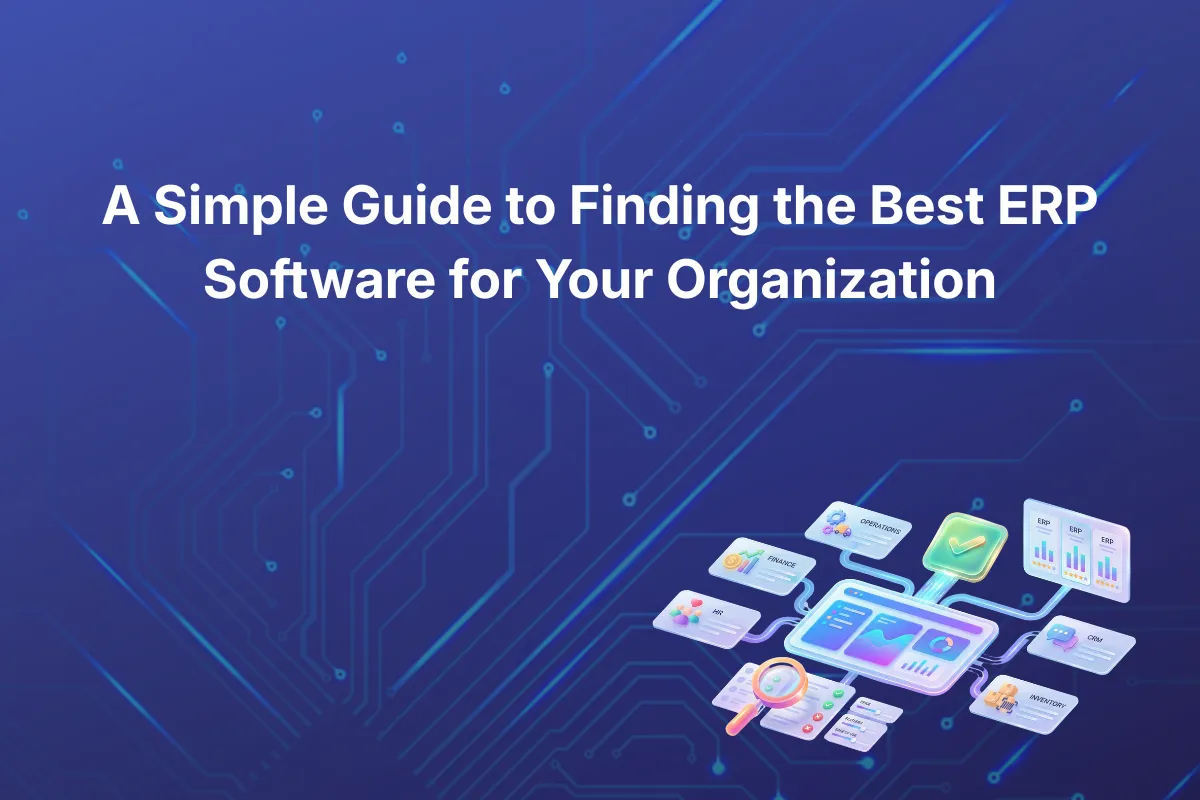

Are you struggling to manage sales, accounts, HR, and inventory in one system without confusion? Many business owners face this problem every day. Different departments often use separate tools, which creates delays, repeated work, and reporting mistakes. When information is not connected, managers cannot see the full picture of business performance. This is why choosing the best ERP software becomes an important decision for any organization that wants better control and clear processes.
Selecting the right system is not only about buying software. It is about choosing a structure that supports your daily work, reduces manual effort, and helps your team stay organized.
Understanding What ERP Software Means
ERP stands for Enterprise Resource Planning. It is a system that connects different departments such as sales, finance, human resources, inventory, and purchasing into one platform. Instead of using multiple spreadsheets or separate applications, everything works together in one place.
The best ERP software allows businesses to manage customer data, track payments, monitor stock levels, process payroll, and generate financial reports without switching between systems. When information flows through one connected structure, errors decrease and efficiency improves.
Start by Identifying Your Business Needs
Before choosing any ERP system, you must understand your actual requirements. Every organization has different priorities. Some businesses focus more on inventory control. Others need strong accounting features. Service-based organizations may require better customer and project tracking.
Ask these simple questions:
- Are sales records properly tracked?
- Do we face delays in financial reporting?
- Is payroll processing taking too much time?
- Do departments struggle to share information?
- Are inventory shortages affecting customer orders?
Clear answers to these questions will guide you toward the best ERP software that matches your real needs.
Look for Easy-to-Use Design
Many employees worry that ERP systems are difficult to operate. A system should not feel complicated. It should have a clear dashboard, simple menus, and easy data entry forms.
When sales staff can record leads quickly and convert them into invoices without confusion, productivity improves. When the accounts team can access reports without complex steps, decision-making becomes easier. When HR can manage attendance and payroll from one screen, time is saved. The best ERP software should support your team, not create additional work.
Department Integration Is Important
One of the main reasons businesses invest in ERP systems is to connect departments. Without integration, teams repeat the same work multiple times.
For example:
- When a sales order is confirmed, inventory should update automatically.
- When payroll is processed, financial records should reflect the changes.
- When a customer makes a payment, sales and accounts should both see the update.
This connection removes duplication and reduces the chance of mistakes. A fully connected system allows managers to view accurate information from all departments at any time.
Reporting and Financial Control
Business owners need clear and accurate reports to make smart decisions. The best ERP software should provide easy-to-read financial statements and performance summaries.
Important reports include:
- Profit and loss statements
- Sales performance summaries
- Inventory status reports
- Payroll summaries
- Customer outstanding balances
When these reports are available instantly, management can identify problems early and take action quickly.
Support for Growing Organizations
Businesses change over time. They hire more employees, expand product lines, and open new branches. The system you choose should support this growth.
If your team increases from ten to fifty employees, the software should handle additional users without difficulty. If new departments are added, the system should allow expansion without replacing the entire platform. Choosing the best ERP software means selecting a solution that can grow with your organization.
User Access and Data Control
Every department handles sensitive information. Sales teams should not access payroll details. HR should not modify financial statements. Good ERP software allows role-based access, where each employee sees only the information related to their work.
This structure maintains discipline within the organization and reduces internal errors. Controlled access also helps management monitor activities effectively.
Training and Ongoing Support
Even the best system requires proper training. Before finalizing your decision, check whether the provider offers guidance and assistance. Employees should feel comfortable asking questions and receiving support during implementation.
Training sessions, clear documentation, and responsive assistance show that the provider is serious about helping clients succeed. Without proper guidance, even good software may become difficult to manage.
Comparing Cost and Value
Price matters, but it should not be the only factor. Low-cost systems may lack important features. High-priced systems may include tools that your organization does not require.
Instead of focusing only on cost, evaluate value:
- Does the software solve your main challenges?
- Does it reduce manual work?
- Does it improve reporting accuracy?
- Does it connect all departments properly?
he best ERP software is one that provides long-term value and supports daily operations effectively.
Why Businesses Choose ERP-Based Systems Like Oreius ERP
Many organizations prefer ERP systems that combine sales, finance, HR, and inventory into one structured platform. Oreius ERP is designed to support these core business functions in a connected way.
With Oreius ERP:
- Sales teams can manage leads, quotations, and invoices.
- Finance departments can generate accurate reports and track payments.
- HR teams can manage employee records, attendance, and payroll.
- Inventory can be monitored in real time.
When a sales order is created, related departments receive updated information automatically. This coordination helps businesses operate in an organized and controlled manner.
Oreius ERP focuses on practical features that address real business challenges. It supports clear reporting, structured workflows, and smooth department coordination. Businesses that require better control over operations often look for systems that offer these capabilities.